You already understand the pattern. The work is what you do when it shows up.
Coaching for self-aware adults who can explain exactly why they do what they do, and still find themselves doing it. We work in the space between insight and action.

Awareness alone doesn't create change.
You can name the attachment style, trace the pattern to its origin, and predict exactly how the next argument will go. Then it goes that way anyway. Insight is where this work starts, not where it ends.
Insight
You understand why you over-explain, people-please, shut down, or spiral. You've read the books. You may have done therapy.
Action
In the moment the pattern gets activated, in a real conversation or a real decision, you respond differently. Then you do it again.
Notice
Recognize what is happening in your body and mind as it happens, not afterward.
Name the urge
Identify the pull the activation creates: to fix, flee, prove, soothe or control.
Stay with it
Build the capacity to tolerate the discomfort long enough to have a choice.
Respond
Choose a different behavior, practice it between sessions, and review what happened.
High-functioning, self-aware, and stuck in a familiar place.
Clients tend to be capable in most areas of life, with one or two patterns that keep costing them in relationships, decisions, or how they treat themselves.
- Life transitions and starting over: relationships, career, identity, motherhood, and the next chapter
- Rebuilding self-trust
- Relationship and attachment patterns
- Boundaries and guilt
- Overthinking and uncertainty
- Emotional and nervous system regulation
- Breaking repetitive behavior patterns
- Decision-making
- Telling activation apart from information
That last one runs through almost everything. A strong feeling is real, but it isn't always telling you what to do. Learning the difference is often where change begins.
Psychology, behavior change, and the body.
I hold a master's degree in Marriage & Family Therapy. I practice as a coach, not a licensed therapist.
What I bring to this work is more than my education and credentials. I bring my own life experience too: the patterns I've had to see clearly in myself, and what it actually took to change them. I care about using all of it to help people build lives that feel more like their own.
My training in family systems shapes how I see patterns: most of what we repeat made sense somewhere. My background as a certified personal trainer shapes how I think about change: it happens through repetition, under realistic load, with someone paying attention to form.
Sessions combine psychological education and reflection with practical application, accountability, and specific experiments between sessions. You leave each one knowing what you are practicing next.
Where do you get stuck?
Read 18 short statements and choose how often each one sounds like you. At the end, you'll see the three areas where you're most likely to get stuck, what that can look like day to day, and what we would work on together.
This is a reflection tool, not a psychological test, and it doesn't diagnose anything. Your answers are private and are not sent anywhere.
Where you're most likely to get stuck
The longer the bar, the more often this shows up for you right now. It describes a pattern you can change, not who you are.
A deliberate start, then work built around you.
Every client begins the same way. What follows is specific to your goals and patterns, not a program everyone moves through.
Application & assessment
You tell me what you're working with: recurring patterns, current circumstances, what you've already tried, and what you want to be different. You can also take the free self-assessment first.
Fit & scope review
I review every application personally to confirm that coaching is the right kind of support for what you're facing and that we're a good fit. If coaching isn't the right fit, I'll help point you to the right support. Even if it isn't me, I still want to help you get there.
Initial Assessment Session
A focused deep dive into where you are, where you want to go, what repeatedly gets in the way, and which patterns should come first.
Individualized coaching plan
You receive a plan built from your assessment: the areas we'll focus on, the behaviors we'll practice, and how we'll know it's working.
Ongoing 1:1 sessions
Reflection, psychological education, and practical application, with accountability and specific work between sessions when it helps.
Private 1:1 coaching.
Initial Assessment Session
- In-depth review of your application and self-assessment
- Mapping where you are, where you want to go, and what gets in the way
- Identifying the first patterns and behaviors to focus on
- The full $250 is credited toward your first ongoing session
1:1 Coaching Session
- Individualized coaching plan
- Psychological education paired with practical application
- Behavioral experiments and accountability between sessions
- Focus that adjusts as your patterns shift
Every session is a full hour, one on one.
Meet by secure video from anywhere, or in person by arrangement.
We decide together in your Initial Assessment Session.
Weekly or every other week
Close enough together to build momentum and practice between sessions.
At least three months
Long enough for a new response to stop feeling forced and start feeling like yours.
Monthly maintenance
Some clients keep a monthly session to check in, stay accountable, and catch old patterns early.
View coaching policies
You'll review and sign the full coaching agreement before your Initial Assessment Session.
Assessment fee
The $250 Initial Assessment Session fee is non-refundable. If we continue working together, it is credited in full toward your first ongoing session.
Payment
Sessions are paid in full at the time of booking.
Cancellations & rescheduling
Please give at least 48 hours' notice to cancel or reschedule. Sessions cancelled with less notice, or missed, are charged in full.
Late arrivals
Sessions end at the scheduled time. If you arrive late, the session is shortened and charged in full.
Confidentiality
What you share in coaching stays private. I won't share your information without your written permission, except when there is a risk of serious harm to you or someone else, or when disclosure is required by law.
Your choices
You remain responsible for your own decisions and actions during and after our work together. I'll support, challenge, and hold you accountable, but the choices are yours.
Between sessions
Brief check-ins by email are welcome for practice and accountability. Deeper conversations are saved for our sessions.
Knowing which kind of support you need.
Coaching is psychology-informed, but it is not psychotherapy. It doesn't diagnose or treat mental-health conditions. Part of the fit review is making sure coaching is the right kind of help.
Coaching is a good fit when
- You're functioning well day to day and want to change specific patterns
- You have insight and want help turning it into different behavior
- You're facing a transition, decision, or relationship shift and want structure
Clinical support comes first when
- You're experiencing thoughts of harming yourself or others
- Symptoms are significantly disrupting sleep, work, or daily functioning
- You're working through recent or unresolved trauma
If you are in crisis, please don't wait for an application review. In the U.S., call or text 988 to reach the Suicide & Crisis Lifeline, or call 911. Outside the U.S., contact your local emergency number.
By referral only.
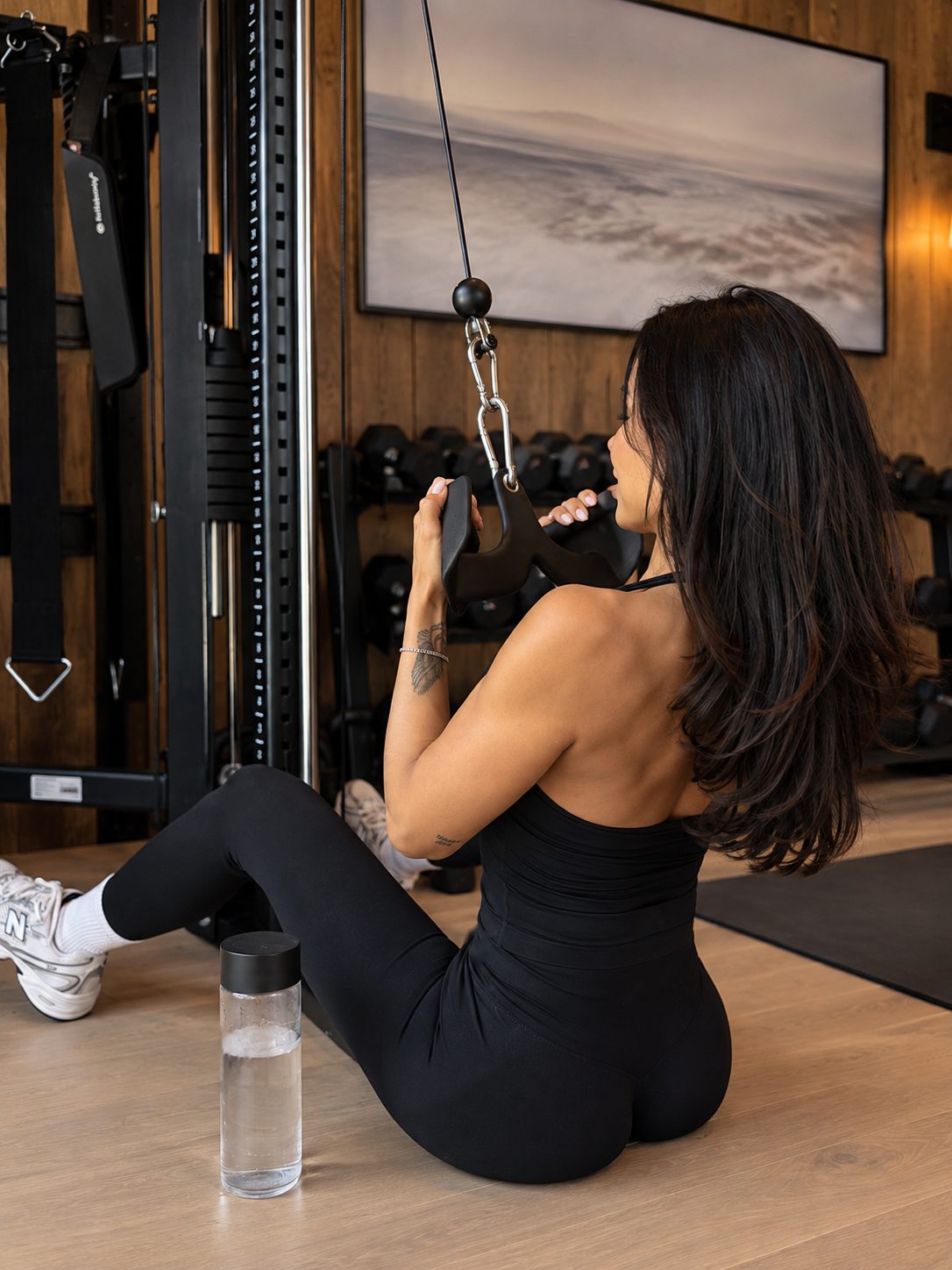
I keep a small number of private 1:1 personal-training spots for clients who come by referral. Training is individualized and separate from my coaching practice.
Been referred? Share your name and who referred you, and I'll be in touch if a spot is available.
Frequently asked.
Are you a therapist?
I hold a master's degree in Marriage & Family Therapy. I practice as a coach, not a licensed therapist. Coaching doesn't diagnose or treat mental-health conditions.
Can I work with you while I'm in therapy?
Yes. Many clients use coaching alongside therapy. Therapy can be the place to process the past, and coaching the place to practice new behavior in the present. I'll ask about it on your application so our work complements, rather than overlaps with, the work you're already doing.
What if coaching isn't the right fit for me?
I'll tell you honestly and help point you to the right support. Even if it isn't me, I still want to help you find it.
How soon will I hear back after I apply?
I read every application personally and respond within a few business days.
Can I book personal training?
Personal training is private and by referral only. If you've been referred, use the training referral form and I'll be in touch if a spot is available.
Apply for 1:1 coaching.
Take your time with this. The more specific you are, the more useful our first session will be.
I read every application personally. If coaching looks like a good fit, you'll receive an invitation to book your Initial Assessment Session.
Your application opens in a secure form.
It takes about ten minutes. Your answers go directly and privately to me.
Start my application →Your application is ready to send.
Copy it below and email it to: